Why Your Pool Floor Keeps Getting a Dusty Gray Layer
Quick Answer: A dusty gray layer on your pool floor is almost always a mix of two things: fine dead-algae residue that survived a chlorine kill and settled out, and calcium carbonate dust that fell out of solution because the water chemistry pushed past what it could hold. Warm water, a pH spike from adding chemicals too fast, or calcium concentrating as water evaporates can all trigger that mineral fallout. The floor collects it because that's the lowest-flow part of the pool, so fine particles settle there before the filter ever gets a pass at them. Brushing lifts the dust back into the water where the filter can catch it, but the layer returns if the underlying chemistry imbalance or algae source isn't corrected. A film that reappears within a day despite steady brushing and balanced chemistry usually points to a filtration or circulation gap instead.
You run your hand along the pool floor after skimming off the leaves and it feels off, coated in a faint film like the bottom of an old aquarium tank. You brush it, and a cloud of fine gray dust lifts into the water, drifts for a minute, and settles right back down. A day later, it's there again, roughly in the same spot near the steps or the deep end where the water barely moves.
That gray dust isn't dirt tracked in from outside, and it isn't a sign your pool is falling apart. It's chemistry and biology, arriving on the floor together, because that's the one part of the pool where fine particles have nowhere else to go.
What That Gray Film Actually Is
Most of what you're seeing on the floor is one of two substances, and often both at once. The first is dead algae. Once chlorine kills an algae cell, the cell wall breaks apart into pieces too small to see individually, but visible by the billions as a gray-green haze that settles wherever the water sits still. The second is calcium carbonate dust, sometimes called calcium dust, a fine white-to-gray mineral that falls out of the water when it's holding more dissolved calcium than it can keep in solution.
Neither substance is dangerous to touch or swim through in small amounts. But together, dead algae residue and mineral dust build that dull, ashy coating that makes a clear pool look tired even when the water itself tests fine.
Why Dead Algae Leaves Dust Behind
Algae doesn't disappear the moment chlorine touches it. A cell dies, its wall ruptures, and the fragments are small enough to slip past a filter on the first pass, especially if the media is a little worn or the pump doesn't run long enough each day. Those fragments drift until gravity pulls them down, and they land wherever the water is calmest.
That's almost always the floor, and especially the corners, steps, and anywhere near a drain where flow is weakest. A pool that recently had even a mild algae bloom, the kind you catch early and treat before it turns visibly green, often keeps shedding this fine gray dust for several days afterward as the dead cells continue settling out of the water column.
The Mineral Half of the Problem
Calcium carbonate dust forms for a completely different reason: water chemistry pushed past what chemists call the saturation point. Pool water holds calcium in solution the way hot tea holds sugar, up to a limit. Past that limit, the excess falls out as a fine precipitate, and that's the white-to-gray dust settling on your floor.
Temperature Swings
Raising water temperature quickly, whether from a heater running hard after a cool stretch or a run of sudden hot, sunny days, pushes the water's saturation point past what the dissolved calcium can hold, and some of it precipitates out as fine dust.
Chemicals Added Too Fast
Soda ash, sodium bicarbonate, and other pH-raising products create a sharp, localized pH spike right where they land in the water. That spike is enough to force calcium out of solution before it has a chance to spread evenly, and pre-dissolving those chemicals before adding them cuts this way down.
Calcium Building Up Over A Season
Evaporation removes pure water and leaves dissolved minerals behind. A pool that gets topped off all summer without ever draining and refilling a portion of it can drift toward a calcium level the water can no longer hold in full, and the excess starts falling out as dust on its own, with no chemical trigger needed.
Why the East End Makes This Worse
Long Island's South Fork doesn't make this problem any easier. A lot of well water out here runs naturally hard, meaning it carries a higher calcium content before a drop of pool chemical ever goes in, so a pool filled or topped off with that water starts closer to its saturation limit than pools inland do.
Salt chlorine generators, common on East End pools, add their own wrinkle. The cell itself creates a small, localized pH spike as it produces chlorine, and over a season that steady, tiny push can nudge calcium out of solution the same way a big soda ash dose does, just more gradually and less noticeably.
Storm season adds a different kind of swing. A heavy summer thunderstorm or a passing nor'easter dilutes chlorine and alkalinity fast, and the instinct afterward is to rebalance quickly with a big dose of whatever the water is short on. Rushing that correction, especially raising pH or alkalinity in one large addition, is exactly the kind of sharp chemistry shift that forces calcium out of solution as dust. The humid air that settles in behind those storms keeps surfaces damp longer too, giving any algae that survived the chlorine more time to spread before it finally dies off and adds to the pile on the floor.
Why It Keeps Coming Back Even After You Brush
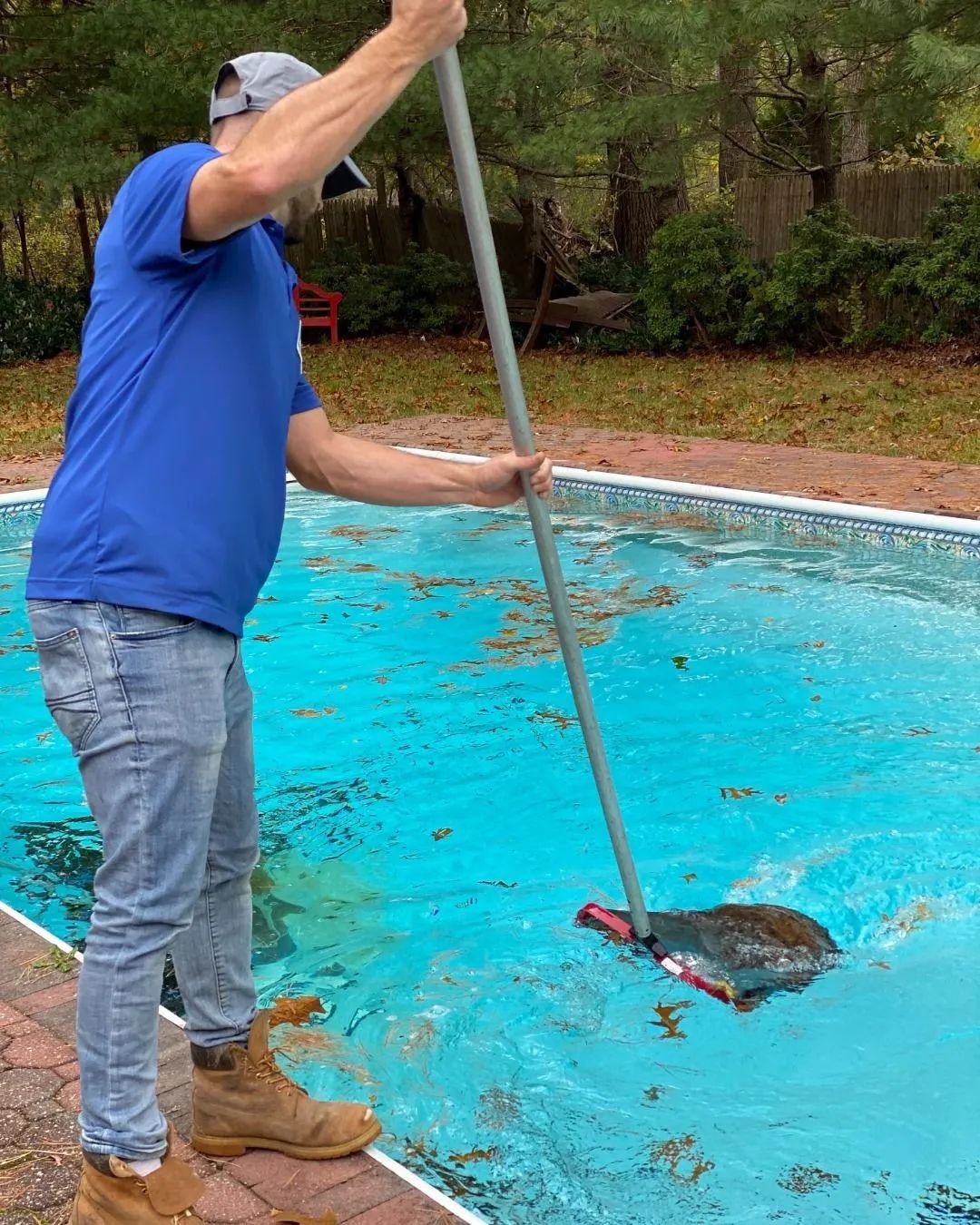
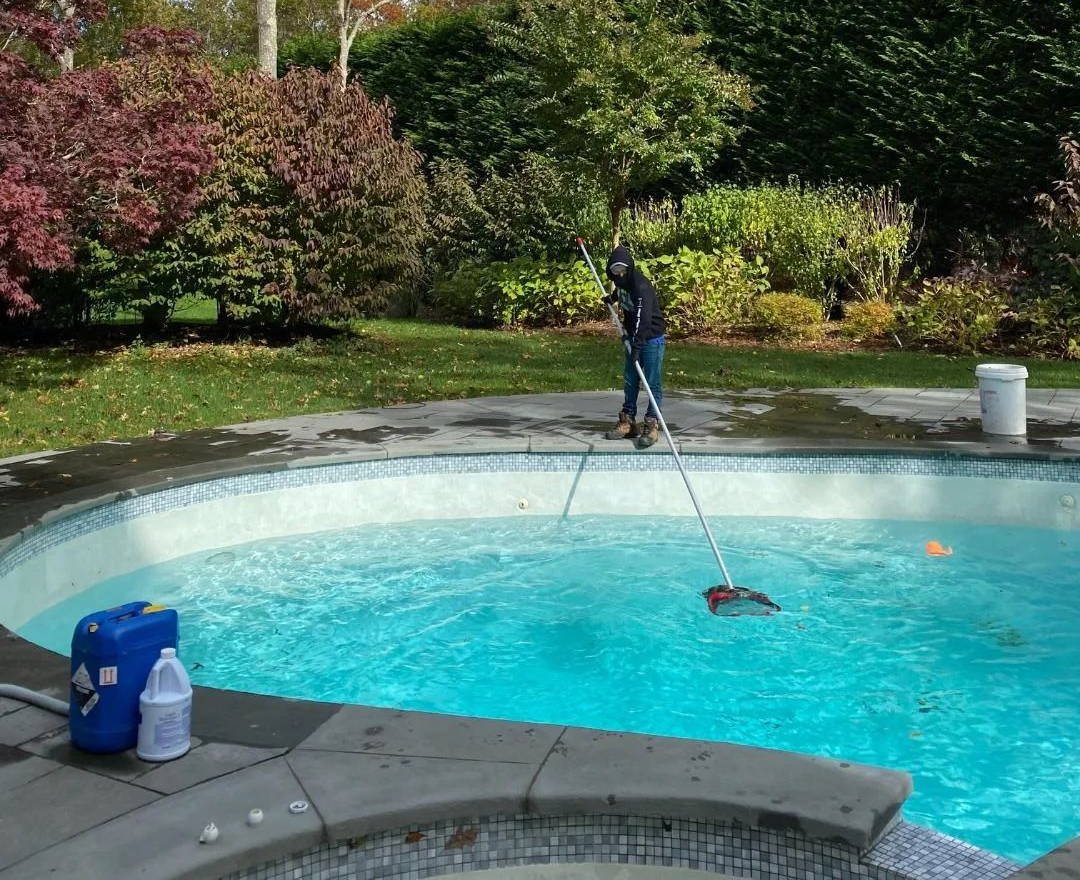
Brushing lifts the dust into the water column, and a healthy filter should grab most of it within a cycle or two. When the gray layer reappears within a day, the usual reason is that the filter isn't running long enough, the pump schedule is too short for the pool's actual volume, or a section of the floor sits in a dead zone the return jets never reach.
Corners behind ladders, the area under a diving board, and the far end of an oddly shaped pool are common dead zones. Water there barely moves even with the pump running, so anything that settles stays settled until someone brushes it loose again.
TIP: Brush toward the main drain or the deepest point of the pool rather than scattering dust in every direction. Herding it toward one collection point gives the filter a concentrated stream to pull from instead of chasing thin clouds all over the pool.
A pump running on too short a schedule compounds the issue. Most residential filters need roughly one full turnover of the pool's total water volume each day to keep up with normal debris, and a pool losing ground on dust and haze is often running well under that.
Telling Algae Dust From Mineral Dust
You don't need a lab to get a rough read on which one you're dealing with. Algae dust tends to carry a greenish or olive cast even when it reads gray from a distance, and it often shows up alongside a slick, slippery feel on the walls and floor where it clings before you brush it loose. Calcium dust reads more true gray to white, has no slippery feel, and tends to show up on other hard surfaces too, like tile lines or spillways, not just the floor.
Testing tells the real story. A recent chlorine or algaecide treatment plus a slick texture points toward algae residue. Calcium hardness reading high, alongside a pH that keeps drifting upward on its own, points toward mineral dust. Plenty of East End pools deal with both at once, since a mild algae bloom and a calcium imbalance often show up together after the same stretch of hot, still weather.
When the Gray Layer Signals Something Bigger
WARNING: Don't assume a persistent gray floor means you need more chlorine. Overdosing chlorine into water that already has a mineral imbalance does nothing for calcium dust, and it can push chlorine high enough to bleach a vinyl liner or irritate skin and eyes. Test first, and treat the actual cause instead of reaching for the strongest chemical on the shelf.
A gray layer that clears with one good brushing and stays gone is just normal water finding its balance. One that returns every single day despite steady chemistry and a filter running on schedule usually points at something mechanical: a filter that's lost its ability to trap fine particles, a pump undersized for the pool, or plumbing that leaves part of the floor essentially stagnant no matter how long the system runs. Those situations are worth a hands-on look, because guessing at chemistry adjustments won't fix a circulation problem no matter how many times you retest.
Frequently Asked Questions
Is the gray dust on my pool floor dangerous to swim in?
Not typically, in small amounts. Dead algae residue and calcium dust differ from an active bloom, so brief contact won't hurt you. Regular buildup signals a chemistry issue worth addressing.
Why does the dust only show up on the floor and not the walls?
The floor is a pool's lowest-flow area, so fine particles settle there first under gravity. Walls see more direct flow from return jets, keeping particles moving until they're filtered out.
Will a clarifier get rid of the gray layer for good?
A clarifier pulls remaining haze from the water but won't fix the cause. Dead algae needs its source addressed, and calcium dust needs the chemistry corrected, or the layer returns.
How often should I be brushing to keep this from building up?
Once a week works as a baseline, with extra attention to corners, steps, and low-flow areas. Active algae or a calcium imbalance may need brushing every couple of days instead.
Does a saltwater pool make this problem worse?
It can contribute. The salt cell creates a small, steady pH shift as it generates chlorine, nudging calcium out of solution gradually rather than at once like a large dose.
Can hard tap or well water alone cause this without any algae involved?
Yes. High calcium hardness alone can produce the same dusty gray look, with no algae involved. Testing hardness alongside chlorine and pH is the only way to tell which one.
Why Your Pool Floor Stays Clear After This
A pool floor free of that gray haze isn't just cosmetic. It means the water is holding its chemistry in a stable range and the filter is actually keeping pace with what lands in the pool day to day. Brushing alone treats the symptom without touching whichever half of the problem keeps producing it, biological or mineral. Light buildup after normal use is unremarkable, but buildup returning the same day is worth a closer look before reaching for another round of chemicals.
Tri-M Pools
has been serving Southampton, NY, pool owners for 50
years, working through the same mix of hard well water, salt systems, and storm season swings that make South Fork pools behave differently than pools inland. That much time on local water teaches which fixes actually hold and which ones just mask the problem for a week. A pool that keeps its
floor clear season
after season usually has its chemistry and circulation working the way they were designed to.