Green Pool After a Storm? The Fast Recovery Steps Pros Use
Quick Answer: A pool goes green fast after a storm because rain dilutes your chlorine and alkalinity while runoff washes in leaves, pollen, and lawn debris that algae feeds on. The fix follows a set order: clear the surface and clean the filter first, correct pH before you add anything else, shock the water to a curative level rather than a routine one, and keep the pump running nonstop until the water clears. Most storm-related green pools turn back to clear within one to three days when you follow that order and don't shut the pump off partway through. Skip the pH step or stop filtering too soon, and the green comes right back within a day.
You open the pool cover, or just walk out after the wind dies down, and the water that was clear on Tuesday is a murky green soup by Thursday. Maybe there's a skim of pollen and leaf litter floating on top. Maybe the power flickered during the storm and the pump sat off for six hours. Either way, you're standing at the edge of a green pool wondering where to even start.
A storm-caused green pool is almost always a chemistry and circulation problem, not a structural one. Algae doesn't move in overnight because something broke. It moves in because the water lost its defenses at the exact moment it got fed. Once you understand that sequence, clearing it stops being guesswork.
Why a Storm Turns Clear Water Green So Fast
Rain looks harmless falling into a pool, but a couple of inches of it does real damage to your chemistry. Fresh rainwater dilutes whatever chlorine and alkalinity you had built up, sometimes cutting both by a third or more in a single downpour. A pool that was sitting at a solid sanitizer level before the storm can drop below the point where it can fight anything off by the time the rain stops.
At the same time, storm runoff carries in exactly what algae wants to eat. Wind-stripped leaves, pine needles, grass clippings, pollen, and dirt from the surrounding yard all end up in the water, and that organic load breaks down into compounds that act as fertilizer for algae spores already sitting in the water, waiting. Add warm, humid air behind the storm system, which is the norm for a summer system moving through the South Fork, and you've built the exact environment algae needs to bloom in under a day.
Power loss makes it worse. A lot of East End storms knock out power for a few hours, sometimes longer, and every hour the pump sits idle is an hour the water isn't circulating chlorine to the corners, steps, and behind the ladder where algae gets its first foothold. By the time power comes back, those low-flow spots are already a shade greener than the rest of the pool, and it spreads from there.
None of this means anything is wrong with your pool. It means the storm hit your chemistry, fed the algae, and cut circulation, all in the same few hours. The recovery process just undoes each of those three things in order.
Getting Ready to Fight Back: Skim, Brush, and Check the Filter
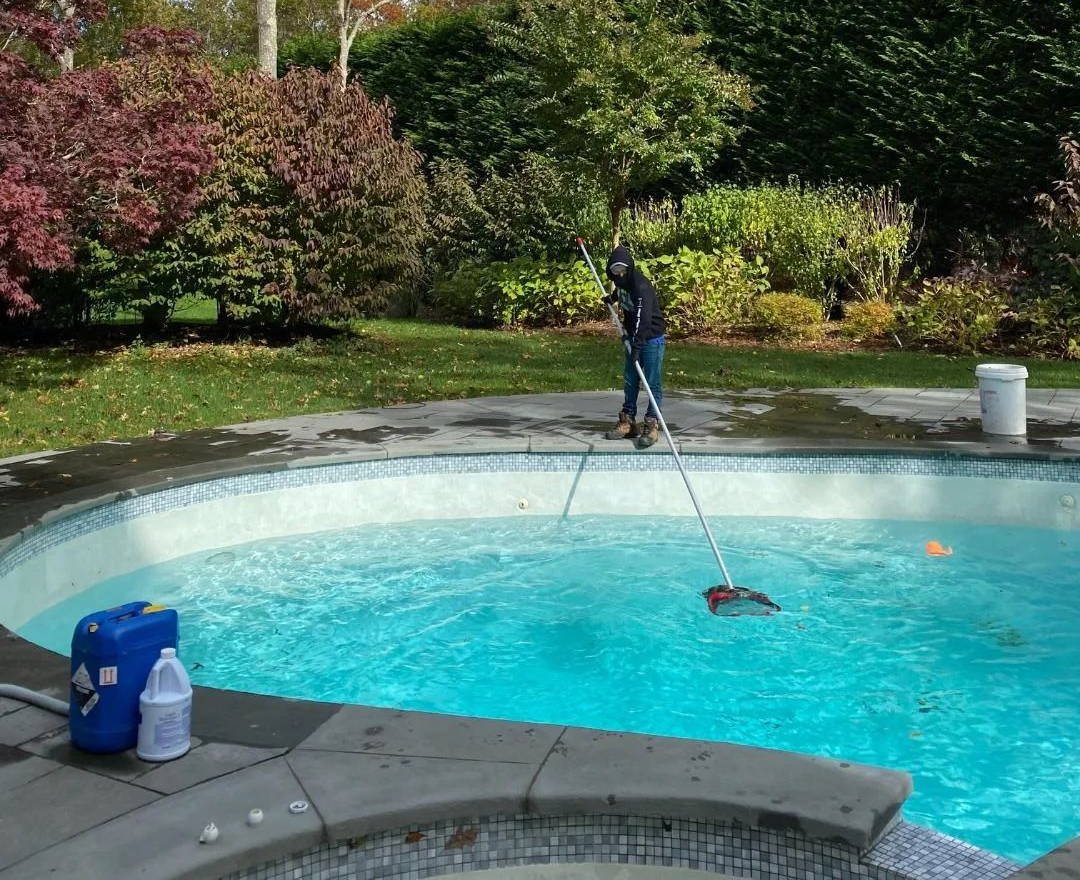
Before a single chemical goes in, clear out what the storm left behind. Skim the surface for leaves and debris, then brush the walls, steps, and floor, paying extra attention to corners and behind ladders where flow is weakest and algae grabs on first. Brushing does more than tidy up. It knocks algae loose from surfaces so chlorine can actually reach it instead of fighting a film that's stuck in place.
Check your pump and skimmer baskets next, especially if the power went out during the storm. A basket packed with leaves chokes off flow before the water ever reaches the filter, and a filter that isn't moving water isn't doing anything for you no matter how much chlorine you add. If your filter uses a pressure gauge, a reading noticeably above where it normally sits after a clean start means it's already loaded and needs a backwash or rinse before you go any further.
This part takes twenty minutes and it's tempting to skip straight to chemicals. Don't. A pump straining against clogged baskets or a maxed-out filter will undercut every step that follows.
Balance the Water Before You Add Anything
Test the water once the surface debris is gone and the filter is clear. You want pH, total alkalinity, and free chlorine at minimum, and if your kit covers it, cyanuric acid too, since a storm can dilute that along with everything else.
pH matters more here than most owners expect. Chlorine's ability to kill algae and bacteria drops off sharply as pH climbs, so a pool sitting at a high pH after a storm can eat through a full dose of shock and barely dent the algae. Bring pH into the roughly 7.2 to 7.8 window first, and let alkalinity settle in behind it, since alkalinity is what keeps pH from sliding right back out of range a few hours later.
TIP: Test again about thirty minutes after you adjust pH, not right away. pH takes time to stabilize once you add anything, and testing too soon just tells you what the water looked like mid-change, not where it's actually landing.
Skipping this step is the single most common reason a shock treatment doesn't seem to work. It's rarely the shock. It's usually the pH working against it the whole time.
Shock to a Curative Level and Keep the Pump Running
With pH corrected, it's time to shock, and a storm-green pool needs more than a routine dose. A maintenance chlorine level generally sits at just a few parts per million, but knocking down an active algae bloom calls for pushing free chlorine well beyond that curative threshold and holding it there for a full day or more before it drifts back down.
Calculate the dose against your actual pool volume rather than eyeballing it. Underdosing just stresses the algae without killing it, and it can bounce back within a day looking worse than before. Add the shock at dusk or after dark if you can, since direct sun burns off chlorine fast and you want as much of that dose working overnight as possible.
Once the shock is in, run the pump continuously, not on whatever schedule you normally use. A storm-recovery pool needs water moving around the clock until it's clear, both to distribute the chlorine evenly and to keep pulling dead algae toward the filter. Expect the water to look worse before it looks better. Algae that's dying often turns the pool a cloudier gray-green for the first day, and that's a sign the shock is working, not a sign something's gone wrong.
Brush the pool again once or twice during this stretch. Dead algae settles onto surfaces and into hard-to-reach corners, and a second brushing knocks it back into suspension where the filter can grab it. Check your filter pressure daily too. A pool full of dead algae clogs a filter fast, and backwashing or rinsing partway through recovery is normal, not a sign of failure.
Handling Chemicals Safely and Watching for a Rebound
Pool shock is strong stuff, and it deserves real caution. Never mix different types of chlorine or shock together, and never combine chlorine products with acid or other chemicals directly. Certain combinations can react violently or release harmful fumes. Always add chemicals to water, not water to chemicals, and pour at the surface rather than splashing it around. Store containers sealed, dry, and away from direct sun, kids, pets, and anything flammable, and use a dedicated dry scoop for each product so nothing cross-contaminates.
WARNING: Don't swim while the water is still cloudy or while you're actively working through a curative shock dose. Beyond the obvious safety issue of not being able to see the bottom, freshly shocked water hasn't settled into a safe range yet, and getting in too early just adds your own body oils and sunscreen to a pool that's already overloaded.
Watch chlorine levels closely for the first two or three days after the pool clears. A rebound bloom is common if free chlorine drops too fast once the initial shock burns off. A quick retest each morning during that window catches a slide before it turns the water green again.
How Long Recovery Actually Takes on the East End
Most storm-caused green pools clear within one to three days when the steps above happen in order and the pump never stops running. Smaller storms with a brief power blip often clear in under 24 hours. A pool that sat through a multi-day nor'easter with extended power loss and heavy runoff from surrounding trees and marsh grass can take closer to three or four days, especially if the algae had time to establish before anyone noticed.
Humidity plays a bigger role out here than people expect. The same damp, warm air that makes late summer feel heavy also slows how fast surfaces dry and speeds up how fast algae spreads once it's established. A South Fork pool sitting under thick August humidity after a storm may take a little longer to clear than the same situation somewhere drier. Sandy soil kicked up by wind and rain adds fine sediment to the mix too, which can make the water look cloudy even after the green is gone and the filter is still catching up.
If you're three or four days in with steady chemistry and a filter running hard and the water still hasn't budged, that's usually a sign of something mechanical rather than a chemistry gap. It's worth having a technician look at circulation and filtration directly.
Frequently Asked Questions
Do I need to drain a green pool after a storm?
Almost never. Most storm-related green pools can be restored through proper chemical balancing, shock treatment, brushing, and filtration. Draining is generally unnecessary unless severe staining, contamination, or prolonged neglect has occurred.
Why did my pool turn green again two days after clearing?
This usually happens when chlorine levels fall too quickly after treatment, allowing surviving algae to return. Low-flow areas can also harbor algae. Continue testing chlorine regularly and maintain circulation until levels remain stable.
Can I shock the pool during the day after a storm?
Yes, but evening is usually better. Sunlight can break down chlorine quickly, reducing its effectiveness. Shocking after sunset allows the treatment to work longer overnight, giving it more time to attack active algae.
Is it normal for pool water to look worse before clearing?
Yes. Dying algae can temporarily make pool water appear cloudy, gray, or milky green. As filtration removes the dead algae, the water should gradually become clearer, so avoid adding unnecessary chemicals during this stage.
How often should storms turn a properly maintained pool green?
A well-maintained pool should usually handle a typical storm without turning green. If green water develops after nearly every storm, consistently low chlorine, poor alkalinity, inadequate circulation, or excessive organic debris may be contributing.
A Clear Pool Starts With the Right Recovery
Once the storm passes, getting a green pool clear again is mostly about restoring the balance that the weather disrupted. Removing debris, correcting the water chemistry, and maintaining strong circulation gives chlorine the conditions it needs to eliminate algae instead of repeatedly fighting the same bloom. Staying consistent through the recovery period also helps prevent cloudy water, recurring algae, and unnecessary chemical use.
For homeowners in Southampton, NY, storm recovery is a familiar part of seasonal pool care. With 50
years of experience, Tri-M Pools
understands how quickly East End weather can affect pool water and filtration. A methodical recovery process keeps the cleanup manageable and helps return the pool to clear, balanced condition without relying on guesswork.